The Problem I Didn't Know I Had
For years, I thought I was making healthy choices. Cheerios for breakfast, pretzels for a snack, whole wheat bread for sandwiches. These were supposed to be the "good" options, right?
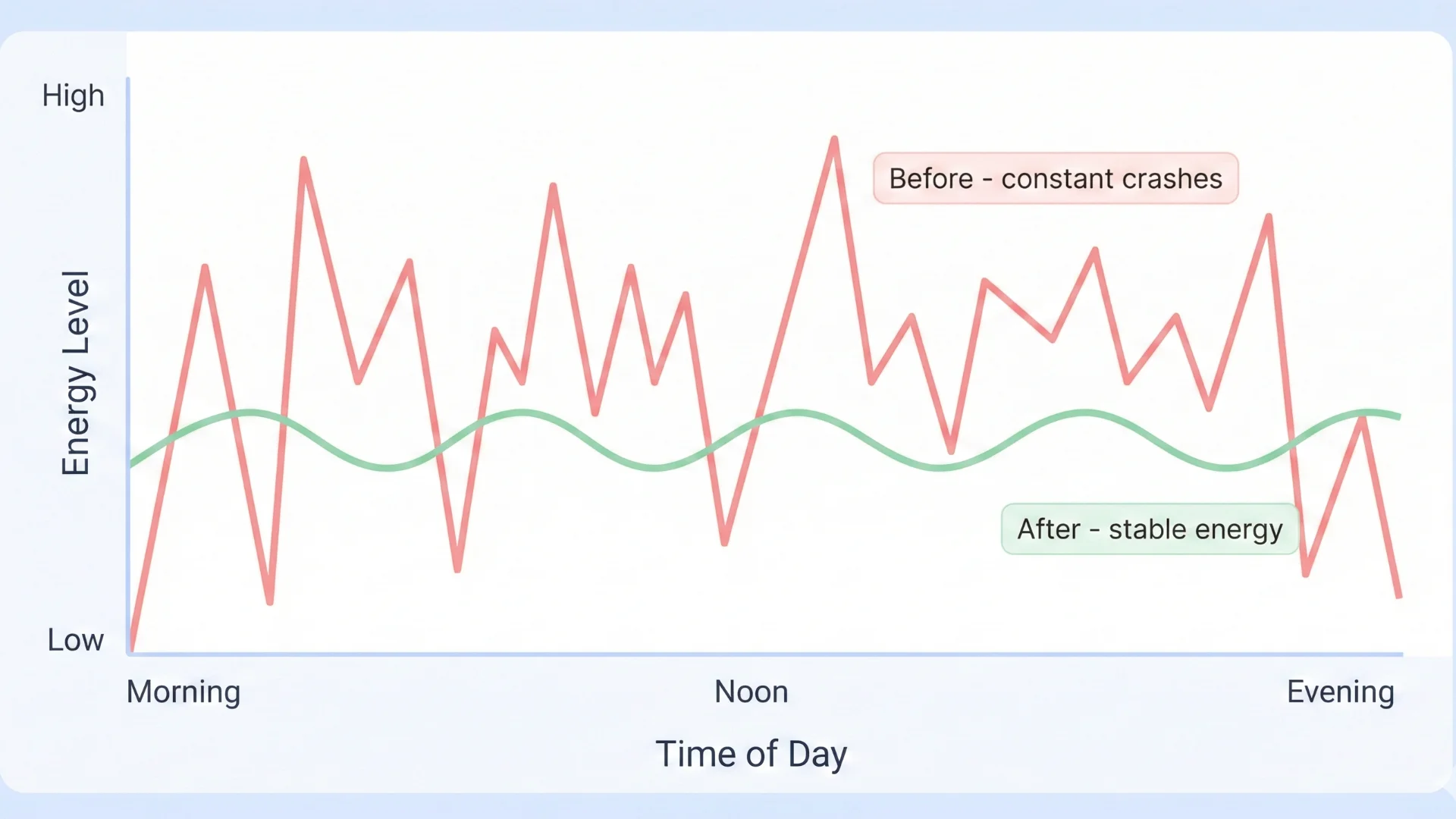
But every day around 10am, I'd feel so exhaused (likely from the sugar spike). By 2pm, I was starving again. I thought this was just normal, that everyone dealt with constant hunger and energy dips.
Then I discovered the Glycemic Index (GI), a measure of how quickly foods spike your blood sugar. And I realized: I was eating "healthy" foods that were sabotaging my energy all day long.
Here are three simple swaps I made that changed everything.
Swap #1: Cheerios → Steel-Cut Oats
What I Was Eating:
Cheerios
- GI: 75 (High)
- What happened: Quick energy spike at 7am, crash by 10am, starving before lunch
What I Changed To:
Steel-Cut Oats
- GI: 52 (Low)
- What happened: Steady energy until lunch, no mid-morning crash
Why It Works:
Cheerios are processed grain that digest fast - your body turns them into sugar almost immediately. Steel-cut oats are whole oat groats that are just chopped up, so they digest slowly and release energy gradually.
The Reality Check:
Instant oats don't work. I tried them first (thinking "oats are oats") and had the same crash as Cheerios. Turns out instant oats have a GI of 82 - even WORSE than Cheerios! The processing destroys the benefit.
Other Good Options:
- Rolled oats (GI: 57) - quicker than steel-cut, still better than Cheerios
- All-Bran (GI: 51) - if you want cereal you can pour from a box
- Greek yogurt + berries (GI: 35) - totally different format but works great
Swap #2: Pretzels → Peanuts
What I Was Eating:
Pretzels
- GI: 83 (High)
- What happened: Satisfied for 30 minutes, then hungry again
What I Changed To:
Peanuts
- GI: 7 (Low)
- What happened: Full for 3-4 hours, no cravings
Why It Works:
Pretzels are just refined flour and salt; pure carbs that spike your blood sugar fast. Peanuts have fat, protein, and fiber that digest slowly and keep you satisfied.
The Real-World Test:
Even if traveling, where pretzels are hard to find, peanuts are usually everywhere (street vendors, 7-Eleven, markets). This swap can actually became EASIER when on a trip; and cheaper too.
What Surprised Me:
I thought I'd miss the crunch and salt of pretzels. But peanuts are crunchy and you can get them salted. The texture satisfaction is the same, but the satiety is 10x better.
I used to eat pretzels multiple times a day (mid-morning, afternoon, evening). Now I eat peanuts once, maybe twice, and I'm actually satisfied.
Other Good Options:
- Mixed nuts (almonds, cashews) - GI: 15-25
- Hummus + carrots - GI: 6 (my other go-to)
- Cheese + whole grain crackers - GI: 35-45
Swap #3: White Bread → Multigrain Bread
What I Was Eating:
White Bread
- GI: 72 (High)
- What happened: Sandwich at noon, starving by 2pm
What I Changed To:
Multigrain Bread
- GI: 48 (Low)
- What happened: Lunch keeps me full until dinner
Why It Works:
White bread is refined flour stripped of fiber and nutrients - it's basically sugar in bread form. Multigrain has whole grains, seeds, and fiber that slow digestion.
Why I Chose Multigrain (Not the "Best" Option):
The research showed Pumpernickel has the lowest GI (46), but I'm being honest: I don't like pumpernickel, and neither do most people I know.
Multigrain is GI 48 - almost as good - and it:
- Tastes similar enough to white bread that I actually eat it
- Available at every grocery store
- Most like it, even children will eat it (important!)
- Works for all sandwich types
The best swap is the one you'll actually stick with.
- Toast it - toasting slightly lowers GI (something about resistant starch)
- Add protein - peanut butter or cheese slows digestion even more
- Store in fridge - cold bread has more resistant starch = lower GI
Other Good Options (If You Want To Go Further):
- Sourdough (GI: 54) - fermentation lowers GI naturally
- 100% whole grain (GI: 51) - if you like the taste
- Ezekiel bread (GI: 36) - sprouted grains, health food store item
- Lettuce wraps (GI: ~5) - if you're going low-carb
The Compound Effect
Here's what happened when I made all three swaps:
Before (Typical Day):
- 7am: Cheerios → 10am crash
- 10am: Snack (more carbs) → brief energy
- Noon: White bread sandwich → 2pm crash
- 3pm: Pretzels → 4pm hungry again
- 6pm: Dinner → 8pm snacking
Constant cycle of hunger, cravings, energy crashes
After (Now):
- 7am: Steel-cut oats → full until noon
- Noon: Multigrain sandwich → full until dinner
- 4pm: Maybe some peanuts if needed
- 6pm: Dinner → satisfied until bed
Steady energy, no crashes, no constant snacking
Ready to Transform Your Health?
Download Lower6 Next and start making smarter food choices based on Glycemic Index data.
Download the AppWhat I Learned
1. "Healthy" Doesn't Mean Low GI
Cheerios, pretzels, and whole wheat bread are all marketed as healthy. And they're not terrible, but they're not optimized for blood sugar control.
2. Processing Matters More Than You Think
Instant oats vs steel-cut oats = same ingredient, radically different effect on your body. The less processed, the better.
3. The Best Swap Is The One You'll Actually Do
I could eat pumpernickel (GI: 46) instead of multigrain (GI: 48), but I won't stick with it. The 2-point difference isn't worth hating what I eat.
4. Small Changes Compound
Each swap was easy. Steel-cut oats taste good. Peanuts are delicious. Multigrain bread is fine. None of these felt like sacrifice.
But together? I feel like a different person. Steady energy, no cravings, better focus, easier to maintain weight.
Try It Yourself
This week, try ONE swap:
- If you eat cereal: Cheerios/Cornflakes → Steel-cut or rolled oats
- If you snack on pretzels/chips: → Peanuts or hummus + carrots
- If you eat white bread: → Multigrain or sourdough
Don't change everything at once. Pick the one that seems easiest and see how you feel after a week.
- How long until you're hungry again?
- Do you have mid-morning or afternoon crashes?
- How's your energy at 2pm? At 4pm?
My guess? You'll feel the difference within 2-3 days.
The Bottom Line
I'm not a nutritionist. I'm not a doctor. I'm just someone who was tired of being tired.
These three swaps - Cheerios to oats, pretzels to peanuts, white bread to multigrain - changed how I feel every single day.
The science is clear. The swaps are simple. The results are real.
If you're dealing with constant hunger, energy crashes, or just want to feel better, start here.
Your prescription for a better life isn't in a bottle—it's on your plate.